Energy Disasters Still Look Different Now
Six years ago, I wrote a post arguing that the energy transition would change not just how we produce energy, but how energy systems fail. The old disasters were familiar: oil spills, pipeline leaks, refinery explosions, offshore blowouts. The new disasters looked smaller and stranger: a broken wind blade, a battery fire, a software failure in a charging network. (The old post: Energy Disasters Look Different Now)
That argument feels especially timely now.
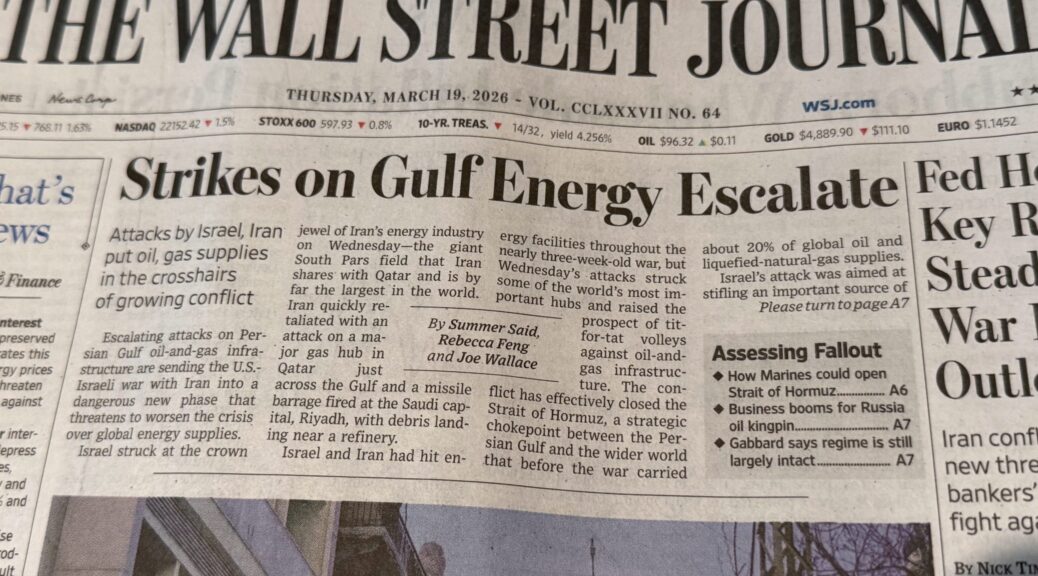
The Iran war has triggered exactly the kind of volatility that reminds us how much systemic risk still sits inside the legacy hydrocarbon system. According to the IEA, the conflict that began on February 28, 2026 has created the largest oil supply disruption in history, with flows through the Strait of Hormuz falling from around 20 million barrels per day before the war to a trickle. The agency also said member countries would conduct the largest-ever emergency oil stock release in response.
Markets have responded accordingly. Brent crude briefly topped $119 per barrel today before pulling back, and the shock has reverberated across equities, inflation expectations, and broader risk sentiment.
This does not undercut my original point. It actually clarifies it.
The energy transition is changing the operational profile of energy disasters. Clean technologies can still fail, sometimes spectacularly, but those failures are often modular, local, and easier to contain. A wind project can go offline. A battery site can catch fire. An inverter can fail. These are real events, but they are generally not equivalent to a tanker spill in the Caribbean or a major offshore blowout.
But at the same time, the transition is far from complete, and fossil fuels still anchor global transport, shipping, petrochemicals, and the marginal price of energy. That means hydrocarbon disruptions remain uniquely capable of becoming macro events. The Strait of Hormuz is not just another piece of infrastructure; it is one of the central chokepoints in the global energy system. A prolonged disruption there affects not only physical barrels, but inflation, monetary policy, and geopolitical risk everywhere.
So the updated version of the old thesis is this:
Energy disasters still look different now.
But markets are still hostage to fossil geopolitics.
That may be one of the clearest distinctions between the old system and the new one. Clean-energy failures are often technical and distributed. Fossil-energy failures remain concentrated, geopolitical, and global in their consequences.
The transition did not eliminate energy risk.
It began to change its shape. And until there is true energy independence, these problems will persist at scale.