Category: All posts

Energize leads $16M Series A in Nixtla

Energize leads $16M Series A in Nixtla

Energize Capital is proud to lead the $16 million Series A investment in Nixtla, the company building foundational AI models for time series forecasting. The round was led by Energize alongside continued participation from existing investors including Greatpoint Ventures and True Ventures. With this financing, Nixtla has raised approximately $22 million to date. Energize partner Juan Muldoon will join the Nixtla board, and Energize senior associate Agustina Soriano Sergi will join as a board observer.

The Challenge

Time series data is the heartbeat of industrial operations. From power grids and batteries to factories, fleets, supply chains, and financial markets, critical systems all rely on massive volumes of data indexed to time. At a utility, this data could look like megawatts levels flowing through the grid throughout the day. For a retail company, it could look like sales per hour. Across industries, this fundamental information is utilized to track operations, analyze performance, and – crucially – make accurate forecasts.

Yet despite its importance, forecasting time series data remains one of the most challenging problems in applied machine learning. Today, in order to make strong predictions, most organizations rely on highly specialized data science teams to build bespoke forecasting models, spending weeks or months to clean and structure historical data, experiment with dozens of statistical and machine learning models, and troubleshoot models to improve accuracy.

Within energy, industrial, and climate settings, the forecasting challenge is even more pronounced. Volatility in energy demand, increasing penetration of renewables, changing supply chain dynamics, and erratic pricing environments are all driving a need for forecasting models that can be faster and more accurate.

Introducing Nixtla

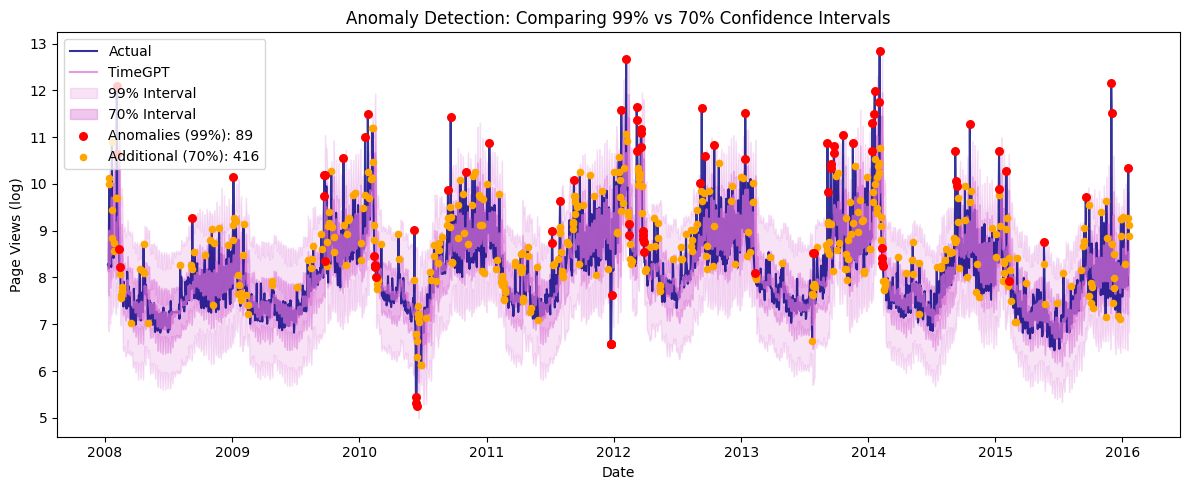
Nixtla was built to address this problem. As the first foundational model for time series data forecasting, Nixtla helps teams generate predictions quickly, accurately, and efficiently. Their enterprise product, TimeGPT, acts as the data-based equivalent to a large language model (LLM), i.e.: where ChatGPT ingests terabytes of text, detects patterns, and predicts language-based outputs, TimeGPT trains on time series data and produces time-based forecasts. Through this process, Nixtla is able to deliver production-ready, customizable models, that deliver faster and better forecasts across industry verticals.

The company launched in 2021 as a collection of open-source libraries (StatsForecast, NeuralForecast, and others) that quickly became favorites of data scientists and engineers. Today, their collection called Nixtlaverse has received over 42,000 GitHub downloads and 10,000 GitHub stars.

This rigorous foundation developed into a commercial platform that enterprises use to deploy forecasting systems worldwide. Since 2025, Nixtla’s enterprise platform has served startups and Fortune 500 companies alike, touting customers like Microsoft, Decathlon, and Zalando. Nixtla has driven results across power demand forecasting, energy price prediction, battery dispatch optimization, inventory planning, anomaly detection in equipment, and more. The platform offers both API-based deployments and self-hosted implementations, allowing enterprises to maintain control of sensitive data while accessing state-of-the-art models.

The enterprise model’s extensive pre-training and “zero-shot” inference works out of the box, eliminating the need for bespoke tailoring, multiple test models, or granular troubleshooting. This not only increases time to value by 10 times but also provides up to 42% accuracy improvements over traditional methods.

Source: Nixtla

The Energize Angle

Nixtla is the latest proof that the future of industrial and climate impact will be driven by foundational digital innovation. We have long invested in the data layer of energy and industrials with portfolio companies like Tyba and Amperon, where we have seen firsthand how accurate market predictions can lead to tangible climate impacts: When clean energy sources like solar or wind are accurately predicted, grid operators can reliably integrate renewables into the power mix. Similarly, when energy demand is correctly modeled, batteries can store and dispatch power more efficiently. This unlocks more clean electricity and supports a balanced, resilient grid.

But this goes beyond energy. Accurate forecasting – no matter the industry – inherently reduces waste. It allows manufacturers to avoid overproducing inventory, moves fleets more efficiently, and identifies equipment anomalies before they become failures.

We also see this as a solution for compute efficiency. The AI arms race is accelerating, requiring immense energy and infrastructure to train and deploy new models. A zero-shot solution like Nixtla’s collapses compute time required for testing and training forecasting models, thereby accelerating innovation and significantly curbing resource demand.

The Team

Nixtla was founded by Max Mergenthaler Canseco (Chief Executive Officer) and Cristian Challu (Chief Scientific Officer), longtime collaborators who met while studying engineering in Mexico. Both founders come from deeply technical backgrounds in machine learning and time series analysis, with experience spanning academic research, consulting, and real-world deployment.

Today, Nixtla is headquartered in San Francisco with a globally distributed team of 17 engineers and researchers. In addition to industry-leading customers, the company has also garnered many awards and recognitions, including G2 recognitions in Best Results, Best Est. ROI, Users Most Likely to Recommend, Easiest to Use, and more.

AI Is Eating Software. Industrial Software Eats With It.

AI Is Eating Software. Industrial Software Eats With It.

Why industrial platforms are absorbing AI—and getting stronger because of it

Every few years, technology narratives collapse into something overly simple.

Right now, the loudest version sounds like this: AI is killing software.

There’s a kernel of truth there—but it misses what’s actually happening. AI isn’t eliminating software; it’s reordering where software value lives, which business models work, and who ultimately captures the upside.

From where we sit at Energize—focused on energy, infrastructure, and industrial systems—the picture looks very different. In our view, industrial software is becoming one of the primary beneficiaries of the AI shift, not a casualty.

The Contradictions Are Real—and They’re Converging

Across technology, energy, and infrastructure markets, several forces are moving at once:

  • Power and energy demand is accelerating, shifting the conversation from pure “energy transition” to large-scale energy addition

  • Climate and renewables remain politically contested, even as deployment continues

  • AI is disrupting traditional software economics and user interfaces

  • Industrial digitization is driving some of the strongest M&A activity in the software market

These dynamics may appear contradictory. In practice, they reinforce one another.

AI is driving unprecedented demand for data centers, power generation, grid reliability, and physical infrastructure. That infrastructure must be planned, permitted, built, connected, monitored, and optimized. All of that work depends on software that understands the physical world.

The question isn’t whether software survives AI. The question is which software does.

Why Industrial Software Looks Different

Much of the “software is dead” narrative is rooted in horizontal SaaS—tools designed for broad adoption, shallow integration, and workflow replacement. Those companies face real pressure from AI-native interfaces and foundation models.

Industrial software operates under very different conditions.

Companies serving energy, infrastructure, and industrial customers are deeply embedded in mission-critical workflows. Many act as systems of record, managing long-lived assets, regulatory complexity, and operational data that customers cannot easily move or replicate.

That position creates a powerful advantage in an AI-driven world.

Take Sitetracker, which supports the deployment of critical infrastructure at global scale. Years of trusted customer data and workflow ownership allow AI to be layered directly into planning, search, and execution—improving outcomes without displacing the underlying platform.

Or ZEDEDA, which sits at the edge of industrial systems, managing distributed compute across real-world assets. As AI moves closer to the edge, that control layer becomes more—not less—valuable.

If a company has:

  1. A trusted data relationship with industrial customers, and

  2. The right to operate within existing contracts and workflows

then AI becomes an accelerant, not a replacement.

AI Changes Services Economics—It Doesn’t Eliminate Them

Another misconception is that AI removes services from the equation. In industrial markets, services have always been part of the value creation—implementation, configuration, diligence, and operational support are unavoidable.

What AI changes is the economics.

We’re seeing companies use AI to compress timelines, automate repeatable work, and turn bespoke services into scalable, productized offerings. That shift improves margins and deepens customer relationships at the same time.

For example:

  • Greenlite applies AI to permitting and regulatory workflows—an area that historically slowed infrastructure projects due to manual processes and fragmented data.

  • GridStrong leverages AI to help utilities better understand, plan, and operate the grid, turning complex system data into actionable intelligence.

In each case, AI doesn’t remove human involvement—it amplifies it, making expertise more scalable and outcomes more predictable.

The Rise of AI-Native Industrial Companies

Alongside established platforms, a new generation of AI-first industrial companies is emerging.

These businesses are “born” into this era. Early on, the line between software and services is often blurry—but that’s how next-generation industrial stacks get built. What matters is speed to value, domain understanding, and the ability to integrate directly into real-world systems.

What stands out is how quickly these teams are scaling with relatively lean organizations, solving narrow but critical problems across energy, infrastructure, and climate markets. Over time, many will become foundational layers in how physical systems are designed and operated.

Examples I have recently seen include:

  • Nixtla: AI-native forecasting infrastructure that enables industrial and energy companies to generate more accurate, real-time predictions across complex, time-series–driven systems.

  • Halcyon: An AI-assisted energy intelligence platform that helps professionals navigate regulatory filings, market signals, and complex energy data with natural-language search and agentic alerts — accelerating better decisions in rapidly evolving energy markets.

The Second-Order Effect Most People Miss

One of the most underappreciated consequences of the AI boom is its impact on physical infrastructure.

Data centers, power generation, transmission, and grid modernization are all seeing renewed urgency. While headlines focus on megawatts and hardware, a meaningful share of that capital flows to software and services.

Roughly 15% of large infrastructure CapEx budgets are allocated to digital systems and services. These are enormous and expanding markets—supported by new budgets, tighter timelines, and technologies purpose-built for today’s constraints.

This is the intersection Energize has focused on for over a decade. Companies in our portfolio like DroneDeploy, Amperon, Nira, PVcase, Banyan Infra, and Aurora Solar are all serving this market and benefiting from t he scale of recent deployments and operations.

The Takeaway

AI is reshaping software.

But industrial software won’t be displaced by AI—it will absorb it.

The winners will be companies that understand physical systems, hold trusted data relationships, and know how to integrate AI into workflows that actually matter. Identifying those opportunities requires specialization and deep domain expertise—not trend-chasing.

That’s where we believe the next generation of enduring technology companies will be built.
Urbint acquired by Itron Corporation for $325M

Urbint acquired by Itron Corporation for $325M

Exit Alert this week!

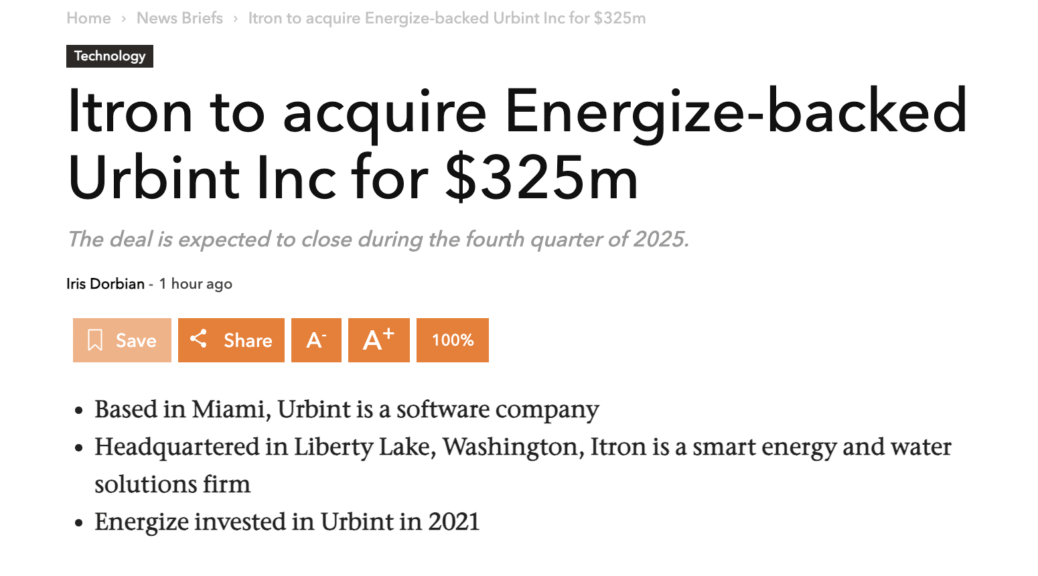
Earlier this week Urbint announced that the company is being acquired by Itron Corporation for $325M. Energize has backed the company since 2021, with Tyler Lancaster serving on the board since then, with support from Mark Tomasovic.

Urbint, founded by Corey Capasso in 2015, uses artificial intelligence to predict threats to workers and critical infrastructure and stop incidents before they happen. Urbint is a software company and successfully leveraged software to improve the safety and health of our critical infrastructure industries.

Energize Capital led the Series C in 2021 and has been fortunate to partner with Corey and his team since then. We’ve seen the team meet the needs for power utilities, natural gas utilities and telecom companies. AI coupled with domain expertise delivers powerful insights saving lives for these economy-driving industries.

The exit is a great success for Corey and the capital base and we are very excited to see how he and Urbint thrive within Itron. The transaction adds intrigue to me because it shows how all hardware companies must become software companies. Itron is best known for the smart meters calculating power consumption around our power grid- and now they are entering the world of software, at scale.

I anticipate more M&A that brings together the physical and cyber worlds. More on that soon!


Energize invests in GridStrong $10M round

Energize invests in GridStrong $10M round

It has been a BUSY week! We held our conference Energize NEXT on Wednesday and yesterday we held the Energize AGM. I will cover those topics soon. On Wednesday our latest investment was announced in conjunction with the conference- and here is the note below.

Energize Capital is proud to participate in the $10M seed financing for GridStrong, the unified platform for electric grid compliance and operations. Congruent Ventures led the round, with participation from strategic utility investors, including ENGIE. Energize Principal Ana Hugener will join the board as an observer. This marks Energize’s first investment in the grid compliance space, an ecosystem we have tracked closely for years, and builds on our prior investments in grid software and cybersecurity.

The company is cofounded by Tom Scaramellino – a serial entrepreneur who has found a true problem with a big budget in the energy transition.

It was special as Josh Posamentier of Congruent was kind enough to fly to the conference and participate on a panel with Tom for Energize NEXT and we were able to announce the deal live on stage! This is our first, of hopefully many, investments with Congruent. We admire their history, presence and returns in the climate landscape.

More from the Energize blog post on “Why we invested” can be found here:

Enter GridStrong

Founded in February 2025, GridStrong is building the unified platform for electric grid operations, simulation, and compliance. In just months, the company has already secured more than half of the top 25 renewable asset owners as customers – including Invenergy, Orsted, AES, ENGIE, Southern Company, and NextEra—and manages over 30 GW of power on its platform.

The company combines deep energy, regulatory, and compliance expertise with modern software to replace fragmented systems and manual processes. By connecting plant data directly into intelligent workflows, GridStrong enables asset owners to automate compliance testing and reporting, reduce dependence on expensive consultants, and gain real-time visibility into the compliance status of entire portfolios. In turn, the platform helps accelerate interconnection and ongoing certification—keeping assets online and revenue flowing—while also reducing the costly fees and penalties that come with noncompliance.

At Energize, we invest in digital solutions that accelerate renewable deployment and improve grid reliability. Compliance sits at the intersection of both. Without confidence in asset reliability, developers can’t bring projects online, and operators can’t keep them running. This investment results from Energize’s deep research into grid technology and compliance, building on our investments in grid software (Nira Energy), cybersecurity (Nozomi Networks), and more.

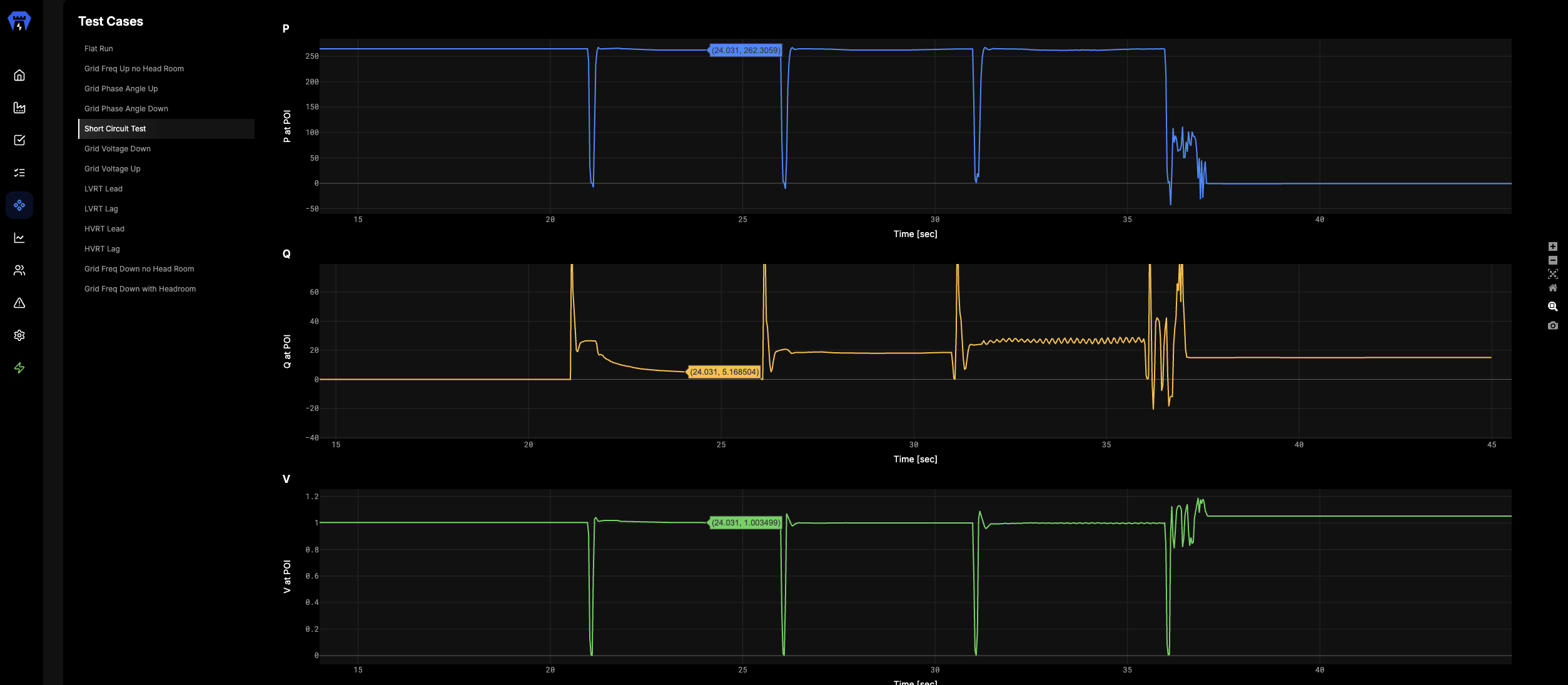
A short circuit test on GridStrong’s platform

The Team

GridStrong’s founding team brings together a rare combination of entrepreneurial experience, regulatory expertise, and software talent. CEO Tom Scaramellino is a multi-time founder who previously scaled an energy software business acquired by C3.ai, where he went on to lead the company’s AI utility software division. Meanwhile, President and Chief Engineer Ryan Quint brings a deep energy and engineering background, including nine years at the North American Electric Reliability Corporation (NERC), where he helped write many of the very standards GridStrong now automates.

Together, Tom and Ryan have created a company that marries technical credibility with entrepreneurial agility. Their deep relationships in the industry and firsthand experience with the compliance burden give them a unique perspective on the problem. It’s this blend of regulatory know-how and software vision that has allowed GridStrong to win the trust of blue-chip customers only months after its founding.

Co-Founders Tom Scaramellino (left) and Ryan Quint (right)

What’s Next

With this new capital, the company will continue to invest in product, including expanding platform AI capabilities, developing additional compliance modules across regulating bodies, and further building integrations across asset data systems.

At Energize, we’re excited to support the GridStrong team as they scale. By streamlining compliance and enabling a faster, more reliable grid, GridStrong is helping unlock the next wave of renewable deployment, bringing us closer to a cleaner, more resilient energy future.

Hiring Alan Glass to Co-Head Energize Endurance

Hiring Alan Glass to Co-Head Energize Endurance

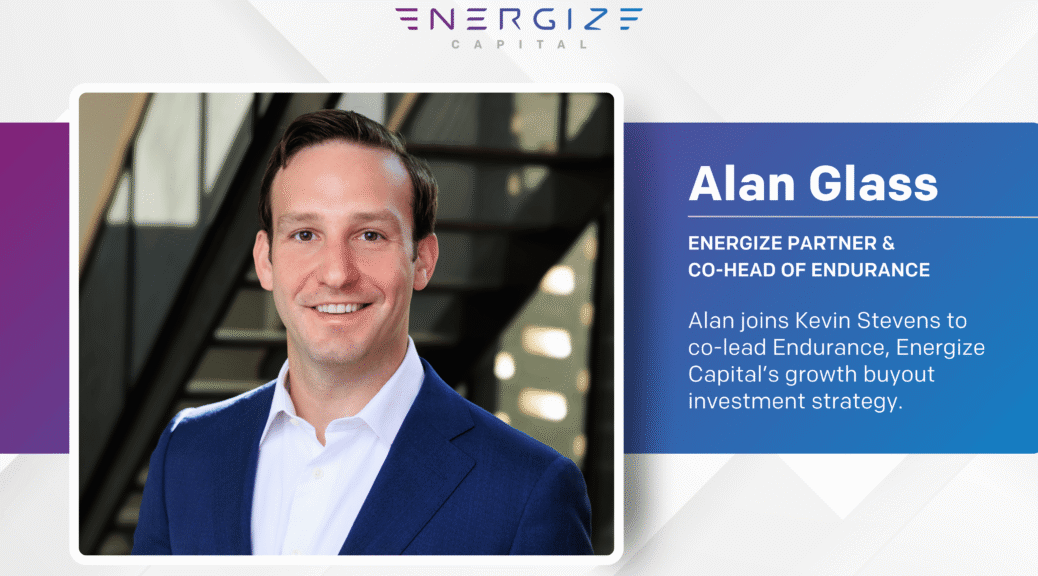
Big news today at Energize as we are expanding our Endurance investment team to meet the future of energy and industrial technology! Specifically we are announcing the hire of Alan Glass as a Partner and Co-Head of Energize Endurance, Energize’s private equity strategy focused on growth buyouts of profitable climate companies.  The Wall Street Journal covered our hire of Alan, here.

Since our founding, Energize has focused on being the specialist capital partner for asset-light companies shaping the next chapter of the economy—from the energy transition to industrial digitization to infrastructure resilience. That mission hasn’t changed, but the opportunity in front of us—and the team required to seize it—has grown dramatically. 

Our Ventures platform, led by co-heads Tyler Lancaster and Juan Muldoon, was built to meet the needs of early-stage companies bringing new technologies to market. These founders needed partners who could help them scale products, sharpen operations, and develop their commercial footholds. To serve them, we assembled a team with deep roots across both finance and energy—people who could see the market opportunity and structure the capital to meet it. 

As the sector advanced, companies began achieving levels of scale rarely seen before in digital climate solutions. They had outgrown the bounds of traditional venture support, but there wasn’t yet a capital partner designed for their next chapter. To meet that need, we brought on Kevin Stevens, an energy industry veteran, to launch our growth platform—equipping later-stage companies with the capital and expertise to bridge the gap between venture and maturity. 

With the Energize platform’s existing strengths and “right to win” as a domain expert we felt that it was best to complement our strengths with an experienced investment expert from a strong traditional private equity platform. Enter Alan Glass. Alan joins us from Vista Equity, where he worked as a senior investor on their Flagship fund. We met Alan over the course of several months and immediately felt the pull of both his cultural alignment as well as his own desire to be part of a big and growing opportunity. Like me and the other Partners ar Energize, Alan sees the ability for a big firm to be built in climate up and down the capital stack; and he wants to be part of that effort. “Why not us” is a common Energize phrase and one I’ve already heard Alan use about the opportunity ahead- and with him, Kevin, the foundation of Energize and our ongoing commitment to hire great talent I do expect we can develop a go-to firm for later stage climate opportunities.

Let’s GO!


Energize Capital invests in Greenlite Technologies

Energize Capital invests in Greenlite Technologies

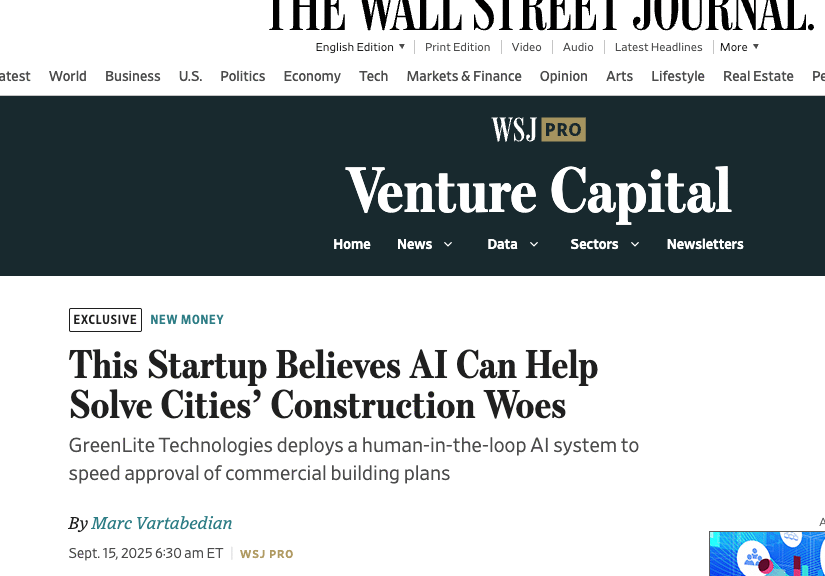
Today Energize as back in the Wall Street Journal! This time not for an acquisition but rather the start of a journey with a company: a new investment in the Series B for Greenlite Technologies.

Greenlite is an AI-based platform that helps accelerate the permitting process for commercial projects. The labor pool at the federal, state, and local agencies are all stressed on people and time. New LLM based technologies that can interpret local rules and enable these groups to accelerate the plan-permit-approval process are providing incredible value and scaling quickly. Excitingly, both sides of the customer base wins: the commercial entities like restaurants or small infrastructure projects – but also the states who don’t have to scale their personnel to serve the increasingly decentralized buildouts.

At Energize we generally believe that the next wave of the infrastructure  movement is decentralized and digitized. Decentralized asset planning and management requires new tools versus historical process and we believe Greenlite will play a meaningful role in that efficiency.

The company was founded by Ben Allen and James Gallagher  and we are excited to partner with them for the next stages of the company’s growth. We are also excited to collaborate with Insight Partners in this round – our first time working with them directly.


Nozomi Networks on the front page of the WSJ

Nozomi Networks on the front page of the WSJ

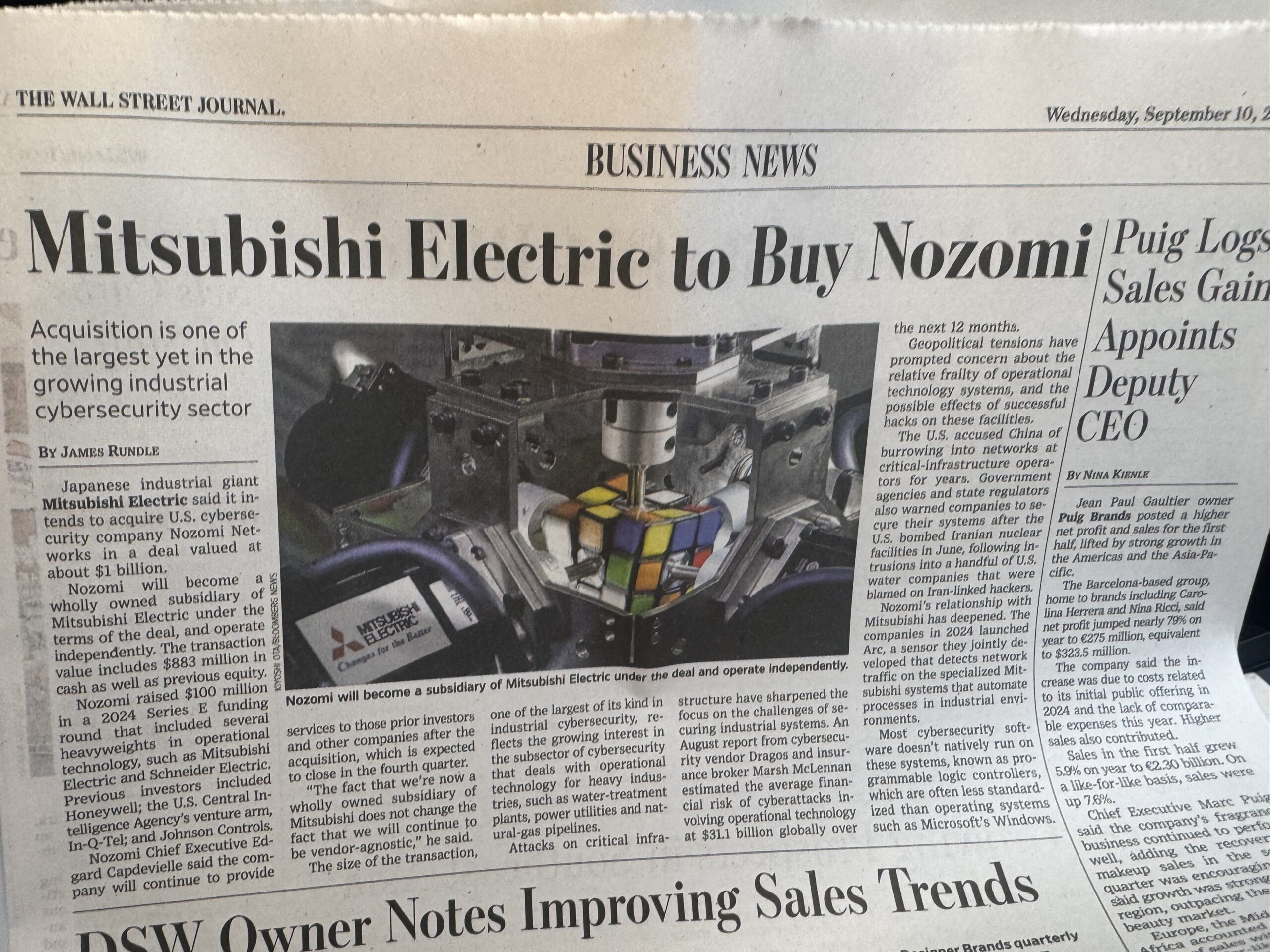
I still receive, and read, the daily paper for the Wall Street Journal. While the news can move quickly, the paper version tells you what is more noteworthy on any given day because an editor is making a decision to determine headlines and understand how other stories may relate. The “front page” left runner with the top summaries is an important stream for the big news of the day.

There is also the added benefit of the print/tangible version that annotates notable events. As I wrote two days ago, Nozomi Networks was acquired by Mitsubishi Electric for ~$1BN.

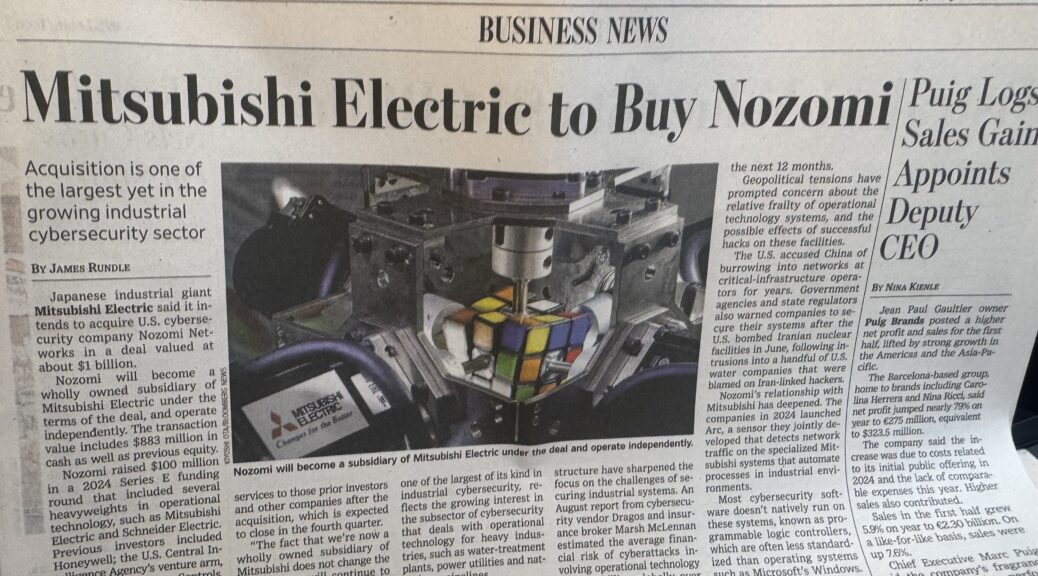
Yesterday’s WSJ had the Nozomi acquisition on the front page highlights, and a big article in the paper itself. A “front page highlight” is a first for me and Energize. The article captures the powerful moment for the ICS industry and shows how industrial controls, visibility and cybersecurity is now a critical technology for the energy and industrial landscape. And now that the article is in a printed version, I can get the article framed- good to enjoy and reward the great outcomes!

Nozomi Networks Acquired by Mitsubishi Electric for ~$1 Billion

Nozomi Networks Acquired by Mitsubishi Electric for ~$1 Billion

M&A marks a milestone, signaling the close of one chapter and the transfer of success from one shareholder base to another with new expectations. It is both an ending and a beginning, reshaping what growth and value mean for the company. Some deals unfold quietly, absorbed without much notice, while others reverberate across industries, forcing competitors and markets to respond. The best deals send thunderous shock waves across industry and create a new standard of excellence for the market.

For many reasons for the industry, for Energize Capital, and for me personally – the Nozomi Networks acquisition announced today by Mitsubishi Electric Co. is a lightning bolt of excitement. This transaction will send positive reverberations for years to come as an example of extreme success at the intersection of software and climate/industrials. While the personal excitement is more a subjective milestone, here are some objective details:

  • this is the largest acquisition of an OT/IoT company in history
  • this is the largest cybersecurity acquisition by an industrial OEM company
  • this is the largest disclosed acquisition by Mitsubishi Electric

Big numbers today… but this team will continue to aim higher within the Mitsubishi Electric framework.

How did we get here?

Juan Muldoon and I first evaluated the OT cybersecurity space back in 2017 and uncovered a rare gem of a team based out of Mendrisio Switzerland that had a product and customer obsession. We led a $15M investment, joined by our friends at Notable Capital, Lux Capital, and Planven. Nozomi Networks and the team are especially personal to me because this was my first investment/ portfolio company at Energize; I’ve been on the board since the investment and have witnessed the highs and lows of company building. Today marks the outcome of hard work and that journey. The best part of the story is the people: the cofounders are some of the kindest in the world. At Energize we say “family first” is our most important ethos. Andrea Carcano and Moreno Carrullo are the cofounders of Nozomi Networks and their quality as people has set a standard that makes it hard for other cofounders to match. The cofounders are 2 parts of a 3-part “three amigos” narrative with the 3rd member being CEO and very early employee, Edgard Capdevielle. Edgard describes himself as teflon- but that is only part of the story. Yes, he was a ruthlessly efficient operator, but he also is a visionary. He saw the opportunity to define a category and use his experience and management skills to create a world-class organization. And, he did just that.

We invested in Nozomi at ~10 employees and around $1M in revenue. Next year the revenue figure will cruise through $100M and the company will be a/the top OT cybersecurity company on the planet.  The industrial technology landscape is not an easy customer base to win over- these are engineers testing the software product at every step… marketing is not enough; product leadership wins. Nozomi’s commercial scale in a tough market is proof that leadership and strong product can crack even the toughest market. And, at the other side of that battle is an amazing outcome.

When Energize joined the investment I quickly gained two friends and mentors in Glenn Solomon from Notable Capital, and Bilal Zuberi from Lux Capital. Both men are legends of the technology landscape and my learnings from them were immeasurable. It’s been a real treat being involved with them here.

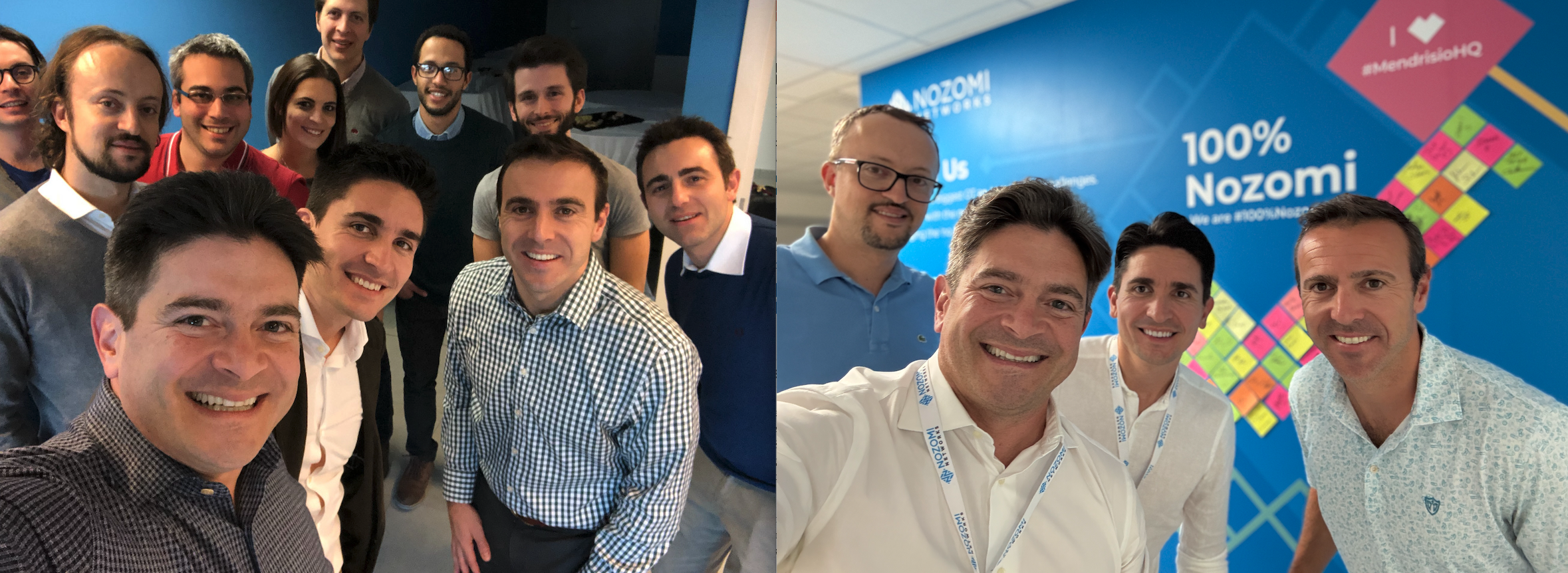
I am also posting two important photos: 1 from when I first visited Mendrisio in 2017 and spoke with the (small) Nozomi team- back in 2017. And a second photo from a month ago where the cofounders and I assembled for an identical layout. We look great, just a bit older. The only sad part of this story is that the Energize-Nozomi chapter now ends. But I hope and expect the relationships to find new avenues over the years to come.


A few weeks ago, in Mendrisio, we recreated my photo with the first 10 Nozomi employees that I took in 2017. We aged a bit, but it was a great journey. A link to the WSJ article on the transaction is here.


Energize NEXT Coming in 2 weeks

Energize NEXT Coming in 2 weeks

Energize has become a central firm at the intersection of climate (energy, industrials, etc.) and capital light business models (software, services). We now host an annual event in Chicago to bring together stakeholders in each of these verticals and it has grown to a massive success with 250+ attendees across a full day.

2025’s event is this September 17th in Chicago. I will be kicking it off with a keynote and then an interview with Michael Polsky in a fireside chat.   Then we have a mix of panels and free time to enable the group to connect!.


The event is invite-only, but you can apply here. Link

Energize’s Endurance – Strategy is Hiring

Energize’s Endurance – Strategy is Hiring

I haven’t posted here in a while but we have a bunch going on in Q3/Q4 so I anticipate more notes to share with you all over the coming months. The first one to share is that the Energize Endurance strategy (our growth buyout strategy) is hiring. The strategy is focused on profitable climate companies and we are  looking for at least one Senior Associate to join us. This role will be based in Chicago with a target start date of Q4 2025.

Here are some notes from the team
The opportunity: As part of the Endurance team, you’ll source and evaluate investments, create theses, conduct diligence, and work closely with management teams to drive growth and value creation. This is a chance to work alongside a small, entrepreneurial team investing in the companies shaping the energy transition.

🔗 Apply here: https://lnkd.in/dQM5fzR8

About Endurance: At Energize, we’ve always believed climate solutions deserve specialist investors. Our Endurance strategy is designed to provide that specialist support to climate companies that are achieving their next phase of scale—profitable or nearing profitability, capital-light, and critical to a modernized economy. We back these businesses with flexible capital, operational support, and our Energize EDGE platform to help unlock their next phase of growth.

Learn more about our Endurance strategy: https://lnkd.in/dXg72XgA